
Home › Squirrel Control › Squirrels in a Chimney or Flue
Chimneys
Squirrels in a Chimney or Flue
This one has a genuine safety dimension, and the first instruction is do not light the fire.
How it happens
Down, Not In
A squirrel in a loft chose to be there. A squirrel in a chimney usually did not.
An open, uncapped pot is an attractive-looking cavity from above, and an animal that puts its head in and slips can end up several metres down a flue it cannot climb. Modern flues are the worst for this: a smooth liner gives nothing to grip, whereas an old brick or parged flue at least offers purchase.
The other version is deliberate — a disused flue used as a nest site, with material dragged in from above. That is less urgent but it is a genuine blockage and it does not clear itself.
You can usually tell them apart by the sound. Frantic scrabbling in one place, sometimes for hours, is an animal that is stuck. Intermittent movement and material falling is a nest.
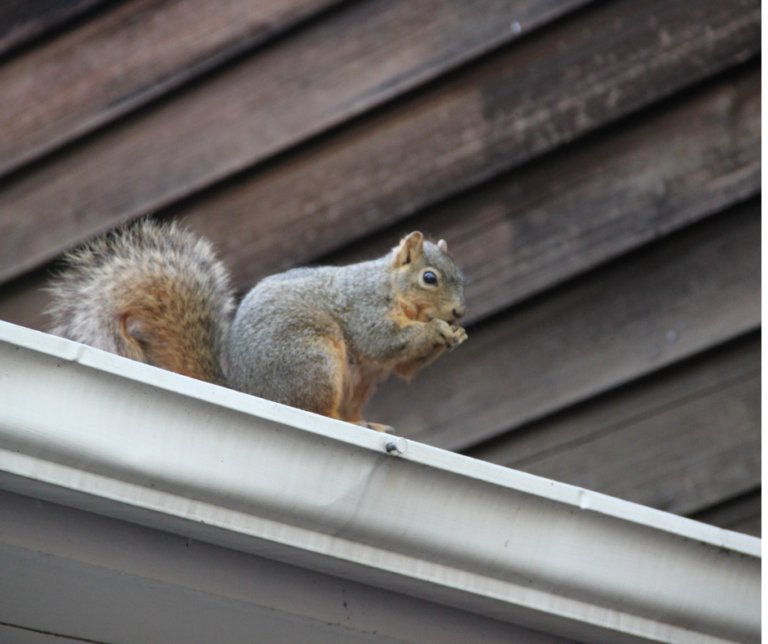
Photographs on this page are for illustration purposes only.
Do not light the fire
The First Rule
People do try this, and the reasoning is understandable: smoke it out. It does not work and it produces the worst possible result.
An animal part-way down a flue is usually below the point where it can escape upward and unable to climb. Lighting a fire kills it slowly, in your chimney, where you cannot reach it. You then have a decomposing animal in a flue, a smell through the room for weeks, and a blockage that still has to be removed.
The same applies to anything poured, sprayed or dropped down. Leave the flue alone.
The gas warning
This Part Is Not About the Animal
If a squirrel or its nesting material has gone down a flue serving a gas appliance — a gas fire, a back boiler, or any appliance sharing that stack — this becomes a carbon monoxide question rather than a wildlife one.
A partially blocked flue can spill combustion products into the room, and carbon monoxide has no smell. So: turn the appliance off, do not use it, and get a Gas Safe registered engineer to check the flue before it is used again. That check is not something a pest controller can do or sign off, and it is not something to defer.
If you do not have a carbon monoxide alarm in that room, this is the moment to buy one regardless of the squirrel.
What we do
Access, Then the Cowl
Where an animal is alive and reachable, the aim is to get it out — through the appliance opening, a soot door or from the top, depending on the construction. Sometimes that works and sometimes it does not, and a flue that has to be opened up is a builder's job as well as ours.
Where there is nesting material, it is cleared. Whether a chimney sweep is the right trade for that part depends on what is up there, and we will tell you straight if it is.
Then the actual fix, which is the same as everywhere else on this site: close the way in. A properly fitted cowl or birdguard on the pot ends this permanently, and it is cheap relative to everything above. If you have several pots and one is open, expect the open one to be used.
Fit the cowl after the flue is clear, not before. The logic is the same as sealing a loft with something inside it.
The disused flue
Capped Is Not the Same as Sealed
Plenty of houses here have flues that were taken out of use when a fireplace was blocked up, and those are prime nest sites: dry, sheltered and undisturbed, with nobody underneath to notice.
A flue capped at the bottom with a vent and left open at the top is an invitation. If you have redundant stacks, having the pots cowled is worth doing before anything happens rather than after, and it is cheaper as planned work than as an emergency.
Do not seal a disused flue completely top and bottom, incidentally. It needs some ventilation or you get damp in the stack. Cowl it, vent it at the bottom, and it stays dry and stays empty.
Short answers
Squirrel Questions
There is scrabbling in my chimney. Can I smoke it out?
No. An animal part-way down a flue usually cannot climb out, so lighting a fire kills it where you cannot reach it and leaves you with a smell and a blockage.
It is a gas fire flue. What should I do?
Turn the appliance off, do not use it, and have a Gas Safe registered engineer check the flue before it is used again. A partial blockage can spill carbon monoxide.
How do I stop it happening again?
A properly fitted cowl or birdguard on the pot. It is cheap and it ends the problem permanently.
Should I cap a disused chimney completely?
Cowl the top and vent the bottom. Sealing it fully at both ends causes damp in the stack.
Is it a sweep or a pest controller?
It depends on what is up there. Nesting material may be a sweep, a live trapped animal is us, and an opened-up flue is a builder as well.
How do I know if it is stuck or nesting?
Frantic scrabbling in one spot, sometimes for hours, is an animal that cannot get out. Intermittent movement with material falling is a nest.
Going further
Squirrel Guides
Where we cover
Squirrel Control Across the Area
Across Buckinghamshire, Bedfordshire and into Hertfordshire. Houses, bungalows, flats, commercial roof voids and listed buildings.
Still Not Sure What You Have?
The time of day answers it before anyone attends. There is no call-out fee for coming to look.
Get in touch
Book an Ant Treatment
Tell us what you have heard or seen, where, and at what time of day.
- Phone
- 01908 465226
- Message us on WhatsApp
- sales@miltonkeynespestcontroller.co.uk
- Milton Keynes Pest Controller Service
- Address
- South Row
Milton Keynes
MK9 3DQ - Covering
- Milton Keynes, Buckinghamshire, Bedfordshire and parts of Hertfordshire