
Home › Cockroach Control
Homes · Kitchens · Food premises
Cockroach Control
What you see at night is a fraction of what is there. The rest is inside the units and behind the appliances, which is where the treatment has to go.
The short version
Why the Ones You See Are Not the Problem
Cockroaches are thigmotactic, which means they want contact on both sides of the body at once. So they spend the day wedged into the tightest gap they can find, and the tightest gaps in a kitchen are inside things: the motor housing of the fridge, the base of the dishwasher, the cavity behind a unit, the void around a waste pipe, a hollow door frame, a warm electrical enclosure.
Two things follow, and between them they explain most of what goes wrong.
First, seeing one in the open is not a sighting of one cockroach. It is a sighting of the overflow — an individual pushed out of harbourage by competition. By the time you are seeing them in the middle of a floor there are a great many you are not seeing.
Second, a surface spray applied where you saw it goes where they are not. The treatment has to reach into the harbourage, which is why the appliances get pulled out and why gel bait placed into gaps does more than anything sprayed in the open.
Which one
German, Oriental or American
The species changes the job, so it gets established before anything is applied. Three turn up here.
The German cockroach is the one that matters most. Small — 12 to 15mm — light tan, with two dark parallel stripes on the shield behind the head. It breeds fastest of the three, it is the most insecticide-resistant insect most technicians will ever deal with, and it lives high as well as low: behind and above appliances, in the warm. Almost all serious commercial infestations are this one.
The Oriental cockroach is larger, 20 to 30mm, very dark brown to nearly black, and prefers cool and damp rather than warm and dry. It is found low down — drains, basements, ducts, under floors, external gullies — and it is the one that turns up in bathrooms and cellars rather than kitchens.
The American cockroach is the biggest, 35 to 40mm and reddish-brown. Less common in domestic property here; associated with drains, ducting and heated commercial buildings.
Where you are finding them narrows it before anyone arrives. Warm and high is German; cool, damp and low is Oriental.
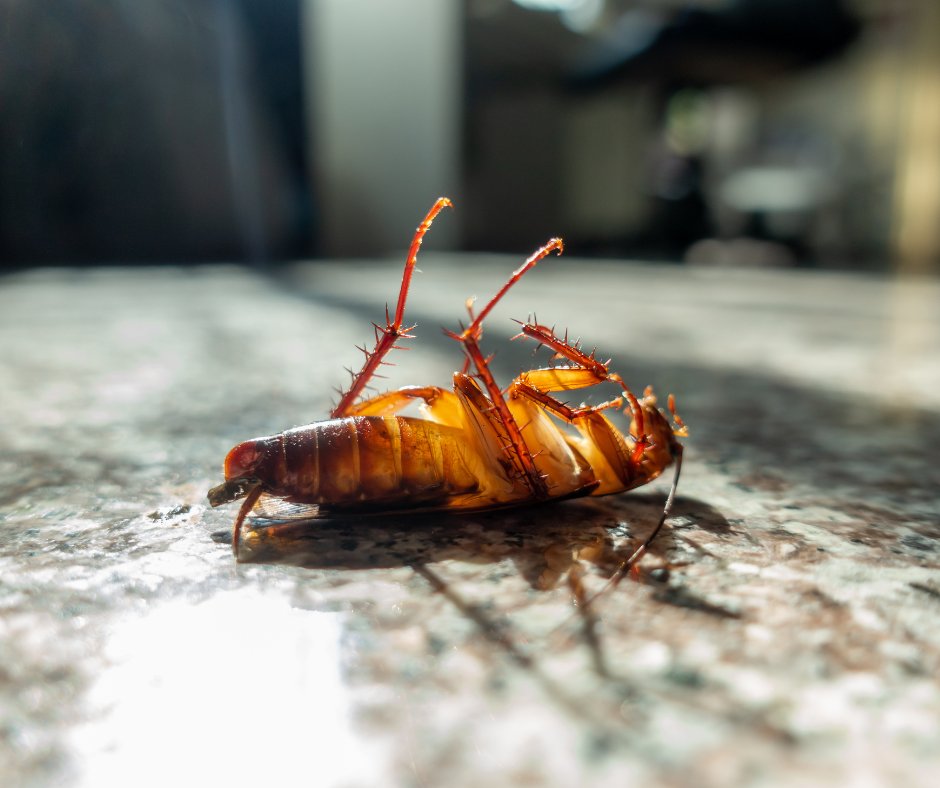
Photographs on this page are for illustration purposes only.
The egg case
Why It Comes Back Three Weeks Later
Cockroaches do not lay loose eggs. They produce an ootheca, a hard purse-shaped capsule holding roughly fifteen to forty eggs depending on species, and that capsule is substantially protected against insecticide.
So the pattern everybody reports is real and it is not a failure: treatment goes in, the visible population disappears within a day or two, a few quiet weeks follow, and then there are cockroaches again. The treatment killed what it could reach. It could not reach eggs inside a capsule.
That is exactly why a follow-up visit, timed against the hatch, is part of doing the job rather than an admission that something went wrong — and why the live page says full eradication usually takes a few days with a follow-up where needed rather than promising it in one.
Resistance
Why the Shop Product Made It Worse
The German cockroach has developed resistance to multiple classes of insecticide, and because it breeds quickly in a heated building, resistance can build inside a single infestation that is being treated badly. There is cross-resistance too, where selection against one compound confers some resistance to others the population has never met.
On top of that, most consumer products repel. For a cockroach infestation that is the worst possible property, because a repelled population does not die — it disperses deeper into the structure and, in a flat or a parade of shops, into the units either side.
So if you have already sprayed, say so when you book. It is not a telling-off. It genuinely changes where the technician expects to find them.
There is a longer piece on why this species is so much harder than the rest in why cockroaches are so hard to get rid of.
What we do
Bait, Placement and a Second Visit
The approach that works is baiting rather than blanket spraying: gel placed into the harbourages themselves, with monitors to show where the population actually is and how it is responding.
Gel bait works the way ant bait does. It is eaten, carried and passed on through the population, including to individuals that never touched it — which is how it reaches the ones inside a motor housing that nothing else is getting to. It is also precisely why a repellent product applied alongside it ruins the treatment, by driving them away from the bait.
What a visit involves: appliances pulled out, units and voids inspected, species established, gel placed into the gaps, monitors set, and a follow-up timed against the egg hatch. Treatments here are guaranteed in the terms set out on the live page, and the technician will tell you what precautions apply during and after.
Initial results are often visible within about 24 hours. Finishing it usually takes a few days and, often, that second visit.
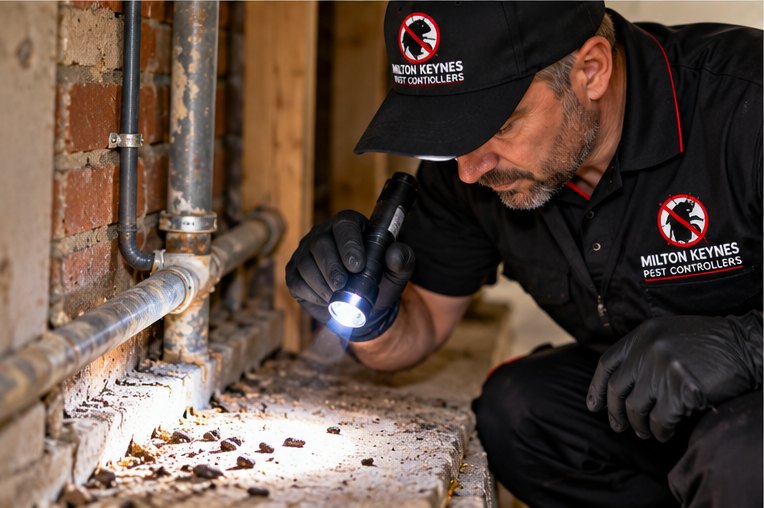
Photographs on this page are for illustration purposes only.
Your part
The Things That Actually Help
Cockroach treatment depends more on the customer than most jobs do, because access decides how much of the population the bait can reach.
- Pull the appliances out if you safely can, or tell us which ones cannot be moved.
- Clear the cupboards under and beside the sink, and the backs of the base units.
- Deal with grease behind and beneath the cooker. Bait competes with whatever else is available, so a kitchen with less on offer makes the bait work better.
- Fix the dripping tap. They need water more urgently than food, and a reliable drip will keep a population going through almost anything.
- Do not spray anything in the meantime.
- Do not move boxes or appliances to another room — cardboard is a favourite harbourage and it travels.
Commercial
Food Premises Are a Different Service
For a restaurant, takeaway, pub kitchen, care home or shop, a cockroach is not only a pest problem. It is a finding on a clock, and the question an inspector asks is not whether you have ever had them — a town-centre kitchen with a yard and a bin store will — but whether you knew, what you did, and whether you can show it.
So commercial work is set up differently: scheduled visits, monitoring, records of what was found and what was done, and out-of-hours attendance so the kitchen keeps trading. Discretion is part of it too.
In a parade of shops or a block of flats, the building matters more than the unit. They move between premises through shared service voids, ducting and the gaps around pipework, which is why treating one unit while the neighbours do nothing does not hold. Proofing those penetrations is the part that makes a treatment last.
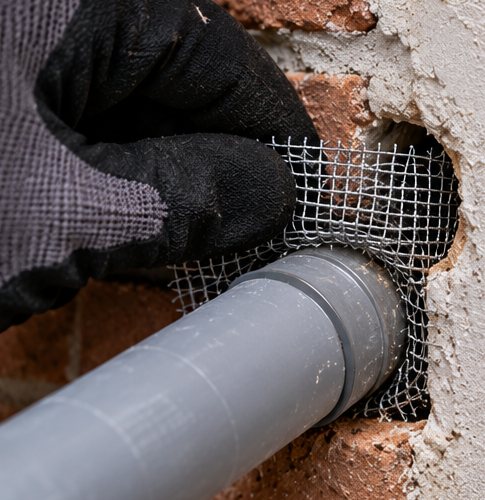
Photographs on this page are for illustration purposes only.
Going further
Cockroach Guides
Short answers
Cockroach Questions
I have only seen one. Is that a problem?
Usually yes. They spend the day wedged into tight gaps, so an individual in the open is generally overflow from a harbourage rather than a lone visitor.
Why did they come back a few weeks after treatment?
Egg cases. The ootheca is a hard capsule that protects the eggs from insecticide, so the adults go and the next generation hatches afterwards. A timed follow-up is part of the job.
Will a shop-bought spray work?
Against German cockroaches, usually not. They are among the most insecticide-resistant insects there are, and most consumer products repel - which scatters them further into the building.
How do I know which species I have?
Where you find them is the quickest guide. Warm places, high and low, behind and above appliances, tends to be German. Cool damp places low down - drains, basements, under floors - tends to be Oriental. A photograph settles it.
How quickly does it work?
Initial results are often visible within about 24 hours. Finishing it usually takes a few days, and a follow-up visit may be recommended.
Is the treatment safe with children and pets?
The products are safe when applied correctly, and gel bait goes into gaps rather than onto open surfaces. The technician will tell you what precautions apply during and after.
Do you treat restaurants and takeaways?
Yes, including scheduled visits, monitoring and records of what was found and done. Out-of-hours attendance is available so the kitchen keeps trading.
I live in a flat and my neighbour has them.
Then the treatment needs to cover more than your flat. They move between units through shared service voids, so treating one in isolation does not hold.
What does it cost?
Pricing is clear, fixed and quoted upfront, and there is no call-out fee for coming to look. The figure depends on the property and the extent, so it is agreed with you before any work starts.
Does having cockroaches mean somewhere is dirty?
Not necessarily. They arrive in deliveries, in cardboard, in second-hand appliances and through shared structures. Poor cleaning lets a population grow faster, but it is rarely how one starts.
Where we cover
Cockroach Control Across the Area
Across Buckinghamshire, Bedfordshire and into Hertfordshire. Homes, flats, restaurants, takeaways, pubs and food premises.
Seen One?
Photograph it before you clear it up. Species and size change the treatment, and there is no call-out fee.
One Last Thing
If you have seen something and you are not sure what it was, take a photograph before you clear it up. Species, size and where it was found tell us most of what we need, and there is no call-out fee for coming to look.
Get in touch
Book an Ant Treatment
Tell us where you are seeing them, what time of day, and whether it is a home or a business. A photograph settles the species faster than a description.
- Phone
- 01908 465226
- Message us on WhatsApp
- sales@miltonkeynespestcontroller.co.uk
- Milton Keynes Pest Controller Service
- Address
- South Row
Milton Keynes
MK9 3DQ - Covering
- Milton Keynes, Buckinghamshire, Bedfordshire and parts of Hertfordshire