
Home › Flea Control
Homes · Pets · Businesses
Flea Control
Flea treatment for homes with pets and for business premises across Milton Keynes, Buckinghamshire, Bedfordshire and into Hertfordshire — treating the carpet, not just the fleas you can see.
Fleas: the Short Version
The thing that makes fleas frustrating is that the ones you can see are the smallest part of the problem. By the time anyone notices a flea, the carpet already holds eggs, larvae and cocoons, and they will keep hatching for weeks whatever you do to the adults.
So a flea job has two halves that have to happen together: the pet, treated by a vet, and the property, treated by us. Do one without the other and the problem comes straight back, which is why most people have already tried something before they ring.
We treat fleas in houses, flats, homes with cats and dogs, and in business premises — offices, shops, kennels, catteries, grooming salons and veterinary practices. Same-day and emergency appointments are available, including evenings and weekends, and there is no call-out fee.
If the property is empty and this is a changeover or an end-of-tenancy obligation, that is a different job with a different method, and it has its own section: end of tenancy flea fumigation.
Ring 01908 465226.
Carpets, rugs, pet bedding, sofas and the places the animal sleeps.
Offices, shops, kennels, catteries, grooming salons and practices.
Treating eggs, larvae and what hatches later, not just the adults.
Including evenings and weekends, with no call-out fee.
Signs
How To Tell It Is Fleas
Four signs. The third is the one that settles it.
- The pet scratching more than usual. Normally the first thing anyone notices, often weeks before a person gets bitten. Some animals chew at the base of the tail or the back of the thighs rather than scratch.
- Bites around the ankles and lower legs. Fleas jump from the floor, so that is where they land. Small, red, intensely itchy, often two or three close together.
- Flea dirt. Dark specks like coarse ground pepper in the pet's coat, on its bedding, or on a pale carpet. It is adult flea faeces, which is mostly dried blood. Put some on damp white kitchen paper and it smears rust-red. Soil does not. That is the test.
- Adults in the carpet pile. Around 1.5 to 3mm, dark reddish-brown, flattened side to side rather than top to bottom, and they jump, not fly. White socks and a slow walk across the carpet will often pick a few up where you can see them.
The commonest flea in a British home is the cat flea, and it is the commonest one on dogs too, so what the pet is does not change much about the treatment.
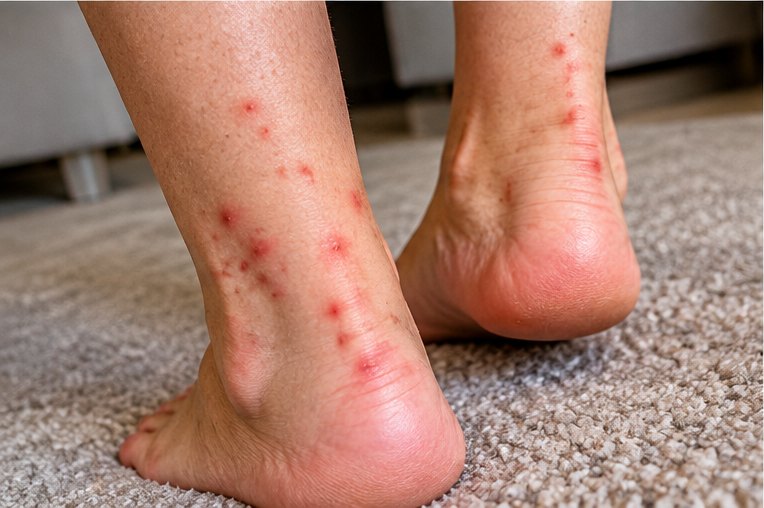
Photographs on this page are for illustration purposes only.
The real problem
Why the Carpet Matters More Than the Pet
This is the single fact that explains everything else on this page.
An adult flea feeds on the animal and lays its eggs there, but the eggs are smooth and they do not stick. They roll off wherever the animal goes — its bed, your bed, the sofa, the hall carpet, the stairs, the car. The eggs hatch into larvae, which are not interested in the pet at all. They avoid light, work their way down into the base of the carpet pile, under furniture and along the edge of the skirting, feeding on the flea dirt the adults have dropped.
Then they spin a cocoon. And the cocoon is the reason flea jobs go wrong.
Add it up and the great majority of a household flea population at any moment is not on the animal. It is eggs, larvae and cocoons in the fabric of the room. Treating the pet deals with the visible minority. It is necessary, and on its own it will not end it.
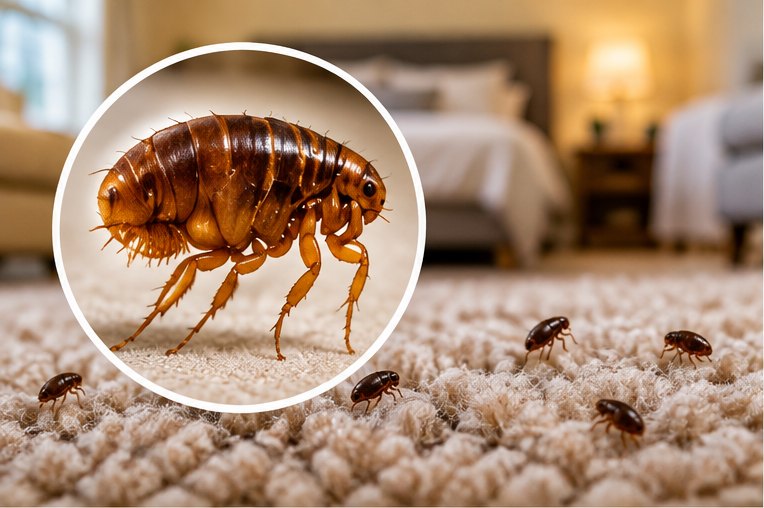
Photographs on this page are for illustration purposes only.
The cocoon
The Stage Nothing Reaches
A flea cocoon is sticky, and it picks up carpet fibres and dust until it is effectively camouflaged and woven into the pile. That casing is also what protects the insect inside it: residual insecticide does not reliably get through to a flea in its cocoon, whatever the product.
Inside, a fully formed adult can wait. Not days — weeks, and in a cool quiet room considerably longer. What brings it out is the signal that something warm-blooded has arrived: vibration through the floor, warmth, and the carbon dioxide of something breathing nearby.
Two practical consequences follow, and both of them catch people out.
The first is that seeing fleas a few days after a treatment is normal. They are newly emerged adults coming out of cocoons that the treatment could not reach, and walking straight onto a treated surface. That is the treatment working, not failing.
The second is that vacuuming is genuinely useful rather than just tidying. It physically lifts eggs and larvae out of the pile, and the vibration and warmth bring adults out of their cocoons early, where the treatment can get at them. That is why we ask you to keep vacuuming after the visit instead of leaving the room alone.
The visit
What We Actually Do
We start by working out where the animal spends its time, because that is where the eggs have fallen. Its bed, the sofa it is allowed on, the spot by the radiator, the bottom of the stairs, the room it sleeps in, the car if it travels.
Then the treatment goes down across the floor coverings and the soft furnishings in those areas, worked into the carpet edge, under and behind furniture and along the skirting, because that is where the larvae are, not out in the middle of the room. Where there is hard flooring the edges, the gaps between boards and the rugs are what matter.
You will need to stay out of the treated areas while it settles — usually a few hours. The technician gives you the actual time on the day, because it depends on what was treated, on the products used and on how well the rooms ventilate.
Fish tanks get covered and their pumps turned off. Pets go out for the duration and come back to dry surfaces. The live page puts it plainly and so will we: the treatments are safe for pets and children when they are applied by a trained professional, which is exactly the part that makes the difference.
The pet
The Half of the Job That Is Not Ours
We treat the property. The animal is your vet's job, and we say so every time, because getting this wrong is what makes people repeat the whole exercise.
Ring your vet and ask what they recommend for your animal, and tell them you are having the house treated so the two line up. What goes on the animal is a conversation for a vet, not for a pest controller and not for a shop shelf: some products sold for dogs are dangerous to cats, and that alone is reason enough to ask somebody qualified.
If the animal is not treated, the eggs keep arriving in the carpet after we have gone and you are paying us to fight a supply line. If the house is not treated, the animal gets reinfested from the floor within days. Both, close together, is the version that works.
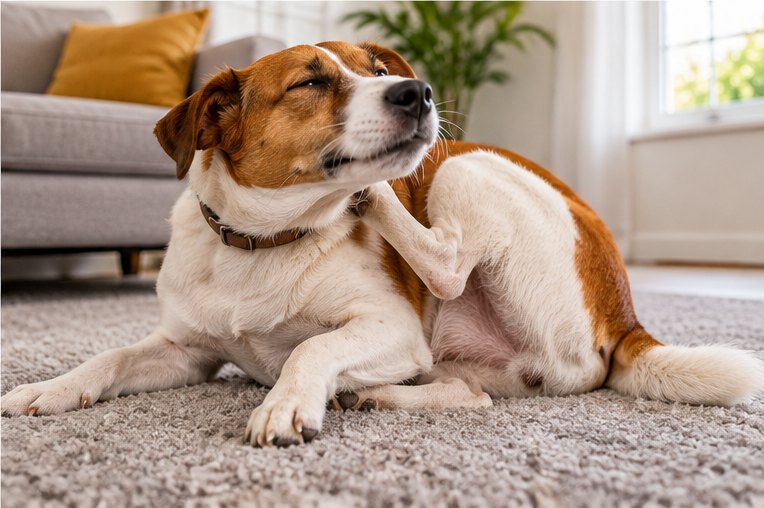
Photographs on this page are for illustration purposes only.
Afterwards
What the Next Few Weeks Look Like
Expect to see some fleas after the treatment. It is the normal course of a flea job, not a sign that something went wrong, and it is worth knowing in advance so it does not panic you.
What you should see is the numbers falling week on week as the cocoons empty out. The live page puts the full effect at a few days as the treatment works through the life cycle; in a cool house with a heavy infestation it can run longer, because the cocoons come out in their own time rather than ours.
What helps in the meantime:
- Keep vacuuming, daily if you can, especially carpet edges, under furniture and wherever the pet lies. Empty the cylinder into an outside bin each time.
- Hot-wash pet bedding and anything the animal sleeps on, at the highest temperature the fabric takes, and tumble dry it.
- Do not shampoo or steam-clean the carpets for the period we tell you. It lifts the treatment straight back out.
- Keep the pet's own treatment going on whatever schedule your vet has set.
If the numbers are not falling after a few weeks, ring us. That usually means a room or an area that was not part of the treatment — a car, a conservatory, a shed the cat sleeps in, a neighbour's garden the animal uses — and finding it is the job, rather than treating the same carpet again.
Business
Fleas in a Business Premises
Fleas turn up in commercial property more often than people expect, and it is rarely anything to do with standards.
Kennels, catteries, grooming salons and veterinary practices have animals through them all day. Shops and offices get them from a staff member's home or from a customer's dog. Warehouses and outbuildings get them from cats living in the roof space or under the floor, and from foxes.
For a business we work around opening hours, including evenings and weekends, and provide a written account of what was found and what was done. Where the source is an animal living in the building rather than a visiting pet, we will say so. Treating the carpet repeatedly while a cat is still raising kittens under the floor is money spent on the wrong problem.
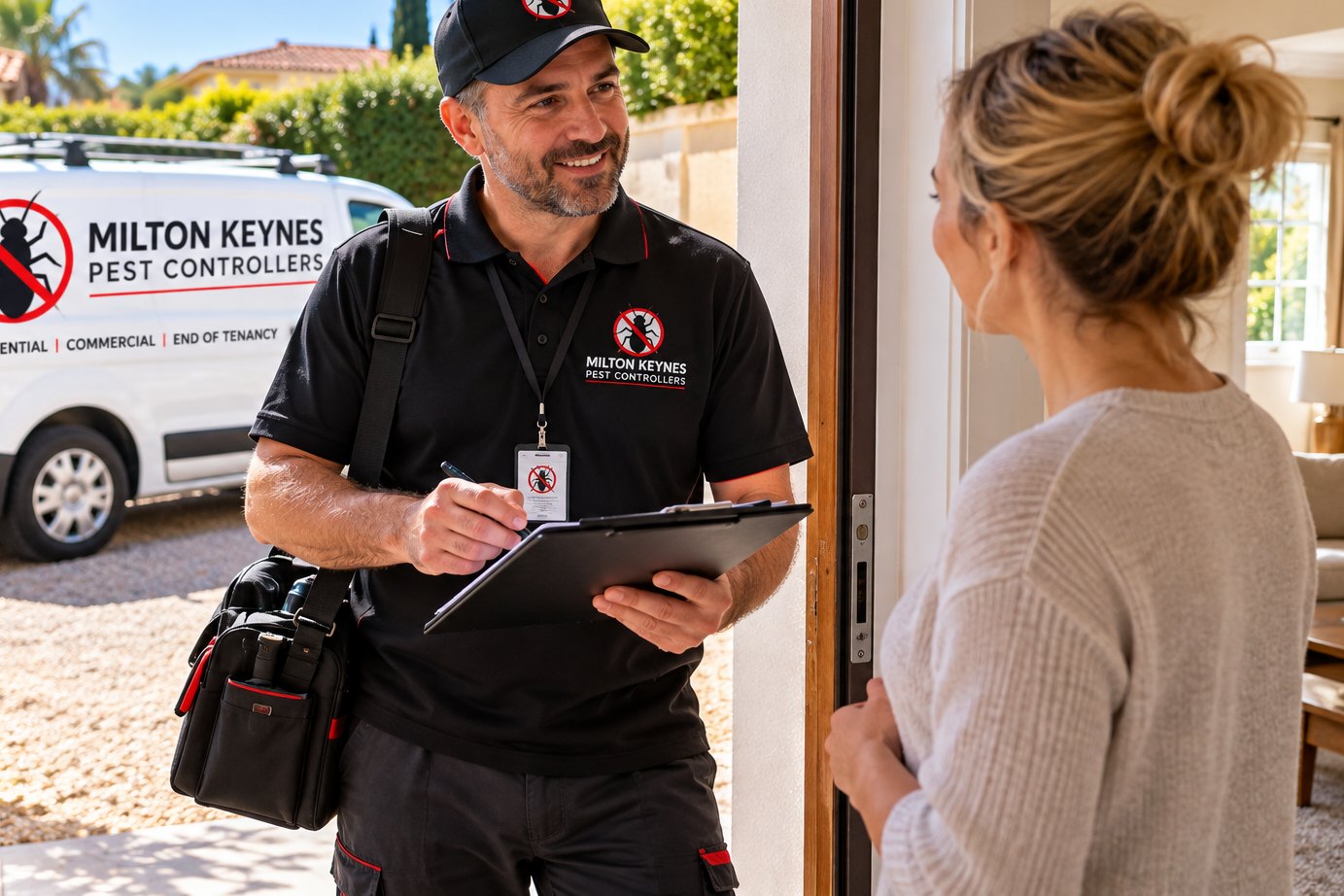
Photographs on this page are for illustration purposes only.
Rentals
Rented Property and Changeovers
Where a tenant is living in the property with a pet, the job is the one described above and we will treat it as such.
Where the property is empty between tenants — a changeover, a void, or a tenancy agreement that requires a flea treatment because the outgoing tenant had an animal — the job is different, and so is the method.
That work, and the written confirmation landlords and agents ask for, has its own section: end of tenancy flea fumigation. It is called fumigation because that is what everybody calls it; in practice it is a targeted treatment of the affected areas rather than a sealed-space fumigation, and that page explains the difference.
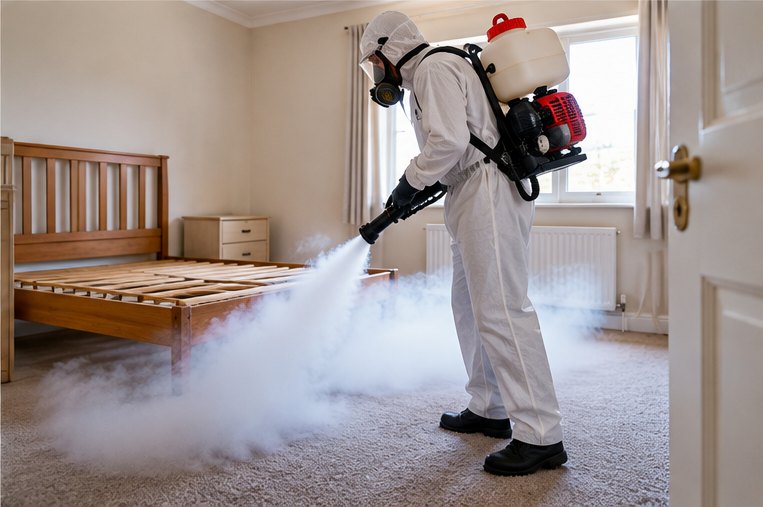
Photographs on this page are for illustration purposes only.
Why us
Why Milton Keynes Pest Controllers
- Local, covering fifteen towns across three counties
- Same-day and emergency appointments, including evenings and weekends
- No call-out fee
- Treatment aimed at the carpet and the cycle, not just the adults
- Fully trained and insured technicians
- Straight advice about what your vet needs to do, and what we cannot
- Written account of what was found and done, for businesses and landlords
- A separate section for empty-property and end-of-tenancy work
Ring 01908 465226 and tell us what you have seen.
Reading
Fleas: the Questions We Get Asked
Ten things people ring and ask us about fleas, answered properly properly, not in a sentence.
The Flea Life Cycle, and Why It Decides Everything
Four stages, and only one of them is the insect anybody ever sees. The other three are why flea jobs go wrong.
Read it →Why Most of the Fleas Are Not on Your Pet
You can treat the animal perfectly and still have a flea problem. Here is why that is not a contradiction.
Read it →The Flea Dirt Test
The single most useful thing you can do before ringing anybody, and it costs nothing.
Read it →Why You Still See Fleas After the Treatment
It is the commonest call we get after a flea job, and usually the answer is that it is working.
Read it →Preparing Your Home for a Flea Treatment
Good preparation is mostly vacuuming and moving furniture. The mistake that costs people a second visit comes afterwards.
Read it →Flea Bites on People
Fleas do not live on people. Understanding why explains almost everything about where the bites turn up.
Read it →Fleas With No Pet in the House
It is one of the most common calls we take, and it always has an answer.
Read it →Vacuuming, Washing, and What Actually Helps
Vacuuming is not tidying up in this context. It is a control measure, and a good one.
Read it →Fleas in a Business Premises
Fleas in a business are almost never about cleanliness, and treating them as though they are wastes the visit.
Read it →Why Shop-Bought Flea Sprays and Bombs Disappoint
Almost everybody has tried something before they call. It is worth knowing why it did not finish the job.
Read it →Before you book
Flea Control — Questions
How do I know it is fleas and not something else?
Do the flea dirt test. Comb the pet over damp white kitchen paper, or take some of the dark specks off its bedding and wet them. Flea dirt is mostly dried blood, so it smears rust-red; soil and ordinary dirt stay dark. Bites around the ankles and a pet scratching more than usual point the same way, but the paper test is the one that settles it.
I have treated the pet. Why are there still fleas?
Because most of the population was never on the pet. Eggs roll off the animal into the carpet, hatch into larvae that live down in the pile, and spin cocoons there. Treating the animal deals with the adults that land on it and does nothing about what is already in the floor. The house needs treating too, and the two want to happen close together.
Is the treatment safe for my pets and children?
The live page says it plainly and so do we: the treatments are safe when they are applied by a trained professional, and that condition is the important part. You will need to keep out of the treated areas for a few hours while it settles, pets included. Fish tanks are covered and the pumps switched off. We will give you the specifics for your property on the day.
Why am I still seeing fleas a few days after the treatment?
That is expected. Flea cocoons resist insecticide, so nothing kills the fleas inside them. They emerge over the following days and weeks, triggered by warmth, vibration and your breath, and walk straight onto treated surfaces. What matters is that the numbers fall week on week. Keep vacuuming - it brings them out sooner.
How long does it take to clear completely?
The live page puts the full effect at a few days as the treatment works through the life cycle. In practice a light case in a warm house is quick and a heavy one in a cool house takes longer, because the cocoons come out on their own schedule. If the numbers are not clearly falling after a few weeks, ring us.
Should I vacuum before you come, or will that spread them?
Vacuum, and keep vacuuming afterwards. It lifts eggs and larvae straight out of the pile, and the vibration and warmth bring adults out of their cocoons where the treatment can reach them. Empty the cylinder into an outside bin each time. The one thing not to do is shampoo or steam-clean the carpets afterwards, which lifts the treatment back out.
Can you get fleas without owning a pet?
Yes, and it is more common than people think. They come in on a visitor’s dog or on clothing, from a previous occupant’s animal, from birds nesting in a soffit or roof space, from a cat living in a loft or under a floor, or from foxes in the garden. Fleas survive a long time as cocoons, so a home can be seeded by an animal that left months earlier.
Do fleas live on people?
No. Cat and dog fleas will bite a person, usually around the ankles and lower legs, but they cannot breed on us and they do not stay. If you are being bitten, the population is living in the carpet and the soft furnishings, which is where the treatment goes.
My house is empty between tenants. Is this the right page?
Probably not. An empty property is a different job, and the tenancy paperwork usually wants a written confirmation. That has its own section: end of tenancy flea fumigation. Ring the same number either way and we will work out which one you need.
Do you treat business premises?
Yes - offices, shops, kennels, catteries, grooming salons and veterinary practices, and rental and holiday accommodation. We work around opening hours, including evenings and weekends, and provide a written account of what was found and done.
Where we cover
Flea Control Across the Area
Across Buckinghamshire, Bedfordshire and into Hertfordshire, and the villages between them. Houses, flats, homes with pets, offices, shops, kennels, catteries, grooming salons and veterinary premises.
Tell Us About the Pets and the Rooms
Whether you have pets and what treatment they are on, which rooms are affected, and how long it has been going on. Same-day and emergency appointments are available, including evenings and weekends.
Get in touch
Book a Flea Treatment
Tell us whether there are pets in the property and what they are on, which rooms are affected, and how long it has been going on. If the property is empty between tenants, say so — that is a different treatment.
- Phone
- 01908 465226
- Message us on WhatsApp
- sales@miltonkeynespestcontroller.co.uk
- Milton Keynes Pest Controller Service
- Address
- South Row
Milton Keynes
MK9 3DQ - Covering
- Milton Keynes, Buckinghamshire, Bedfordshire and parts of Hertfordshire