
Home › Ant Control › Ants in the Kitchen: What They Are After
Ant control
Ants in the Kitchen: What They Are After
Sugar, mostly. Knowing that narrows what you have to do about it.
Sugar first, protein sometimes
Black garden ants are looking primarily for sugars, which is why the trail goes to the jam, the honey, the spilled squash, the fruit bowl and the bin, not to the meat.
They do take protein and fat, particularly in spring when the colony is rearing brood, so a greasy hob or pet food will attract them too. But if you are trying to work out what they are on, start with anything sweet.
Their natural version of this is honeydew, the sugary liquid aphids excrete. Ants farm aphids for it, which is why a heavily infested plant by the back door is effectively a sugar supply a few feet from your wall.
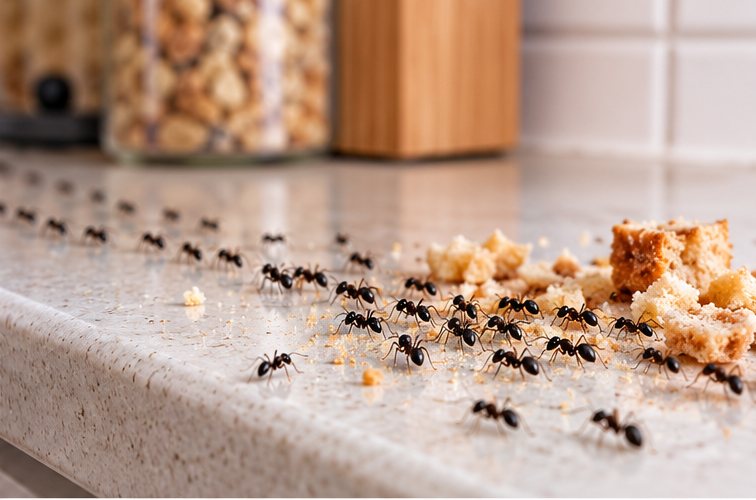
Photographs on this page are for illustration purposes only.
The short list that actually matters
- The bin. A lid that does not close properly, or a bin that is not emptied at night, is the commonest single reason. The recycling box of rinsed-but-not-quite-rinsed bottles and cans comes second.
- Spills behind and under things. Behind the kettle, down the side of the units, under the toaster, the sticky ring where something was poured. The bit you cannot see is the bit they found.
- Open packets. Sugar, cereal, biscuits, dried fruit in card or paper. Rigid containers with proper lids solve it permanently.
- The fruit bowl, particularly anything over-ripe.
- Pet food left down, and the ring of spilled kibble around the bowl.
- Honeydew outside on a plant, a path or a car under a tree.
What this does and does not achieve
Worth being straight about. Clearing the food does not clear the colony. The nest is outside, the queen has never been in your kitchen, and she will carry on producing workers whether or not your bin shuts.
What it does is remove the reward that keeps the trail reinforced. A route that stops paying fades, so the traffic drops. And when bait goes down, it is competing against whatever else is available, so a kitchen with nothing else on offer makes the treatment work considerably better.
That is the honest version: housekeeping is a lever on the trail, not on the colony, and it makes the actual treatment more effective.
Do I need to throw food away?
Far less than people assume. Ants walk on things; they do not gnaw into sealed packaging the way a rodent does.
Anything they have been in goes: an open packet with ants inside, a fruit bowl they have been working, a sugar bag with a trail going into it. Anything sealed, in glass, metal or rigid plastic, is fine once the outside is wiped. Crockery and utensils go through a normal hot wash.
Wipe the surfaces down with detergent rather than a disinfectant spray alone, because the point is removing the pheromone trail as well as the mess.
Before you book
Ant Questions, Briefly
They are going for the pet bowl. What do I do?
Feed at set times and lift the bowl afterwards instead of leaving it down, and sweep up spilled food around it. Standing the bowl in a shallow tray of water works as a short-term barrier while the colony is being dealt with.
Is it because the kitchen is not clean enough?
No. Ants forage constantly and will find a single crumb in a spotless kitchen; the colony is outside and is not a judgement on the house. Clearing food reduces the traffic and makes the treatment work better, which is a different thing from being the cause.
Tell Us Where the Trail Goes
Which room the trail is in, where it goes when it leaves the building, and whether soil is coming up between paving outside.
Get in touch
Book an Ant Treatment
Tell us which room the trail is in, where it goes when it leaves the building, and whether you have found excavated soil outside. A photograph of the trail is worth more than any description.
- Phone
- 01908 465226
- Message us on WhatsApp
- sales@miltonkeynespestcontroller.co.uk
- Milton Keynes Pest Controller Service
- Address
- South Row
Milton Keynes
MK9 3DQ - Covering
- Milton Keynes, Buckinghamshire, Bedfordshire and parts of Hertfordshire