
Home › Mice Control › Mice in the Kitchen, and What To Throw Away
Mice control
Mice in the Kitchen, and What To Throw Away
The question we are asked most, and the answer is narrower than most people fear.
What goes
Judge it by the packaging, not by whether it looks touched.
- Anything gnawed. A hole or a chewed corner means it has been opened, whatever the contents look like.
- Anything in cardboard, paper or a thin plastic bag that has droppings on or immediately around it. Cereal, pasta, rice, flour, sugar, dried pet food.
- Anything loose or open in a cupboard where there has been activity — a part-used bag with a clip on it, an open box.
- Fresh produce that has been sitting out in an affected area.
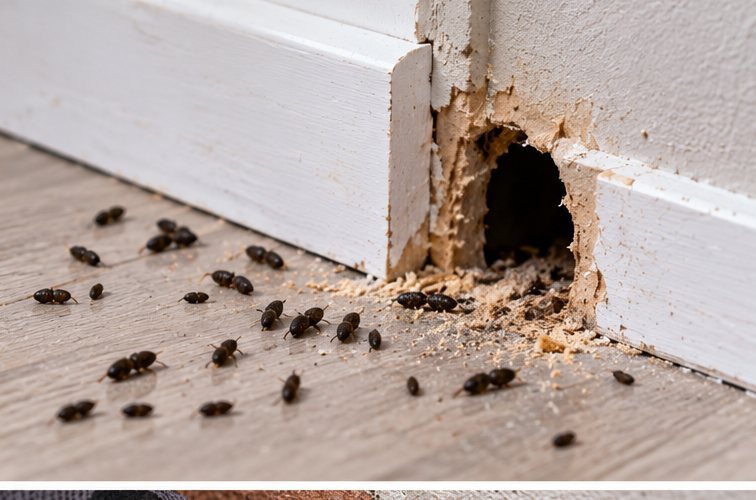
Photographs on this page are for illustration purposes only.
What is fine
- Anything in glass, metal or a rigid sealed container. Tins, jars, bottles, sealed tubs. Wash the outside and keep them.
- Anything in a fridge or a freezer that is closed and undamaged.
- Crockery, pans and utensils. They go through a hot dishwasher cycle or a hot wash and that is that.
People throw away far more than they need to, usually in the first hour after finding droppings. Take an hour, then sort it calmly by packaging.
Cleaning up without making it worse
The one rule: do not sweep or vacuum droppings dry. That puts dried material into the air, and it is the only part of a domestic mouse clean-up worth being careful about.
Instead: gloves on, damp the droppings with a household disinfectant solution and leave it a few minutes, pick them up with kitchen paper, and bag it. Then wipe the surface down with disinfectant. Ventilate the room while you work. Wash your hands properly afterwards.
For cupboards, empty them, damp-clean and disinfect the shelves, and do the same to the back corners and the underside of the shelf above, which is where people stop and where mice run.
Stopping the kitchen being the reason they stay
Dry goods into rigid containers with proper lids — glass, metal or thick plastic. The single highest-value change anyone makes, and it is permanent.
Pet food in particular. A bag of dog or cat food in the utility, or a bowl left down overnight, is one of the most reliable food sources a mouse can find. Feed at set times, lift the bowl, and keep the bag in a bin with a lid.
Then the ordinary things: crumbs under the toaster and behind the cooker, the gap down the side of the units, a bin with a proper lid emptied at night, and nothing left out on the worktop. None of it will clear an infestation on its own — mice get in through gaps and live in voids, and no amount of tidying closes a hole — but it removes the reason for them to stay in that room.
Before you book
Short Answers
Do I need to empty the whole kitchen?
No. Sort by packaging: gnawed or in paper, card or thin plastic with droppings near it goes; glass, metal and rigid sealed containers are fine once wiped. Most people throw away considerably more than they need to.
Is it safe to keep cooking in there?
Yes, with surfaces cleaned and disinfected and food stored properly. Damp-clean rather than dry-sweep, keep dry goods in rigid containers, and get the treatment and proofing done so it stops being a shared kitchen.
Tell Us Where You Are Finding Them
Where the droppings are, where you hear them at night, whether anything has been gnawed, and whether it is a home or a business.
Get in touch
Book a Mice Control Visit
Tell us where you are finding droppings, where you hear them, and whether it is a home or a business. If anything has been gnawed, say what and where — it tells us which route they are using.
- Phone
- 01908 465226
- Message us on WhatsApp
- sales@miltonkeynespestcontroller.co.uk
- Milton Keynes Pest Controller Service
- Address
- South Row
Milton Keynes
MK9 3DQ - Covering
- Milton Keynes, Buckinghamshire, Bedfordshire and parts of Hertfordshire