
Home › Bed Bug Control › Why One Visit Is Rarely the Whole Job
Bed bug control
Why One Visit Is Rarely the Whole Job
It comes down to eggs, and to the seven to ten days it takes them to hatch.
The egg problem
Bed bug eggs are cemented into cracks, seams and screw holes. They are about a millimetre long, they are physically protected by where they sit, and most residual insecticides do not kill them reliably.
At normal room temperature they hatch in roughly seven to ten days. So a treatment that dealt with every living bug in the room on the day still has a fresh generation emerging the following week, from eggs that were laid before anyone arrived.
That is the whole reason for a second visit. It is timed to land after those eggs have hatched and before the new nymphs are old enough to breed.
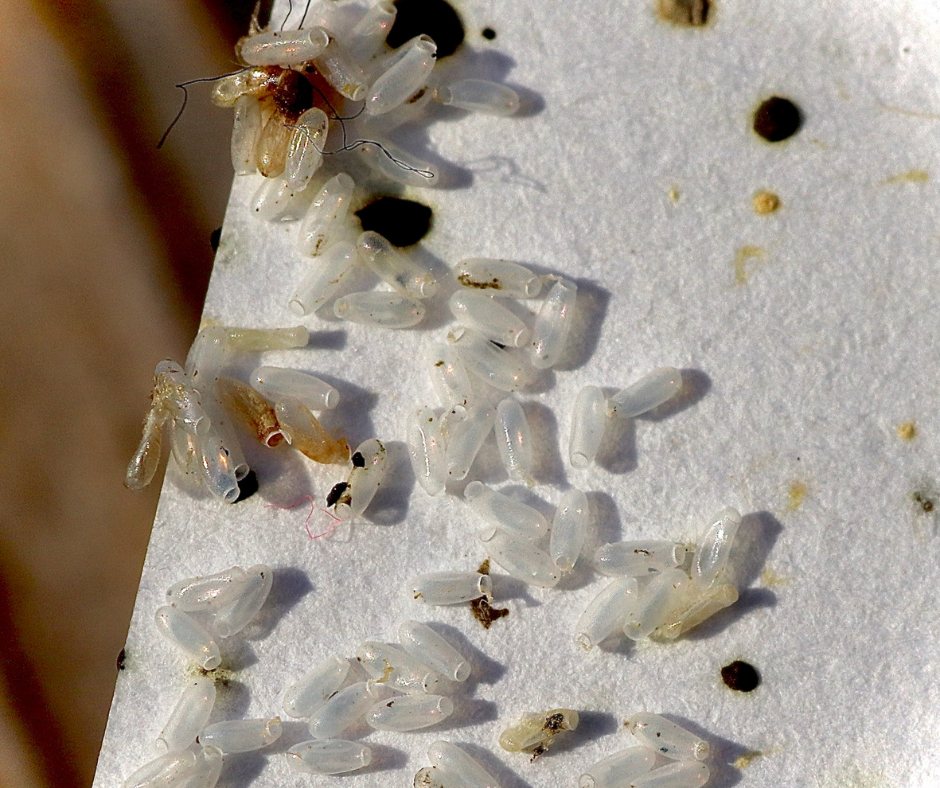
Photographs on this page are for illustration purposes only.
The other reason: they are not all in one place
Even a careful inspection is working against an insect that is 4mm flat and specifically evolved to sit in a gap. In a cluttered room, a period property or a large house, a harbourage can be missed.
A follow-up visit is a second inspection as much as a second treatment. By then there is new evidence to read: fresh spotting shows where activity continued, and that is often what finds the one place the first visit did not reach.
When one visit is enough
A properly run heat treatment can finish it in a single pass, because sustained heat kills eggs as well as everything else. That is its main advantage and it is a real one.
Even then, a room that is part of a larger property, a flat with a shared wall, or a case that has been running for months may need a check afterwards — not because the heat failed, but because the problem may extend beyond the room that was treated.
What to expect between visits
Keep sleeping in the room. Do not move out, do not strip and redistribute the contents, and do not apply anything yourself — shop-bought products can repel bugs away from a treated surface and undo the work.
Seeing the odd bug in the first week or two after an insecticide treatment is normal and expected. What matters is the direction: fewer each week, and bites tailing off.
If activity is the same or worse at the follow-up, that is information, not failure. It usually means a harbourage outside the treated area, and finding it is the next job rather than repeating the same treatment harder.
Before you book
Quick Answers
How long after the first visit is the follow-up?
It is timed around the egg-hatching interval rather than set by a fixed number of days. We will tell you the date before we leave and book it then rather than leaving you to chase it.
I have seen bugs two days after treatment. Has it failed?
Almost certainly not. Bugs tucked into a harbourage during the visit come out afterwards and pick up the treatment as they move. Seeing activity in the first week or two is expected. Tell us what you are seeing and where, and keep a note of it.
Tell Us What You Have Found
Bites, spotting on a mattress seam, or something you have found and cannot identify — tell us what you have seen and where.
Get in touch
Book a Bed Bug Visit
Tell us which rooms are affected, how long it has been going on, and what you have actually found. A photograph of a mattress seam is worth more than any description.
- Phone
- 01908 465226
- Message us on WhatsApp
- sales@miltonkeynespestcontroller.co.uk
- Milton Keynes Pest Controller Service
- Address
- South Row
Milton Keynes
MK9 3DQ - Covering
- Milton Keynes, Buckinghamshire, Bedfordshire and parts of Hertfordshire