
Rat Bait, Pets and Wildlife: How It Is Done Responsibly
A fair question and one worth asking before anybody puts anything down in your house.
Secondary poisoning is the real concern
The risk people worry about is a pet eating bait. That is a genuine risk and it is the easy one to control.
The harder one is secondary poisoning: a cat, a fox, an owl or a buzzard eating a rat that has taken bait. It is the reason professional rodenticide use in the UK sits under a stewardship regime, and the reason there are rules about how, where and for how long these products can be used.
A responsible job is built around limiting that, not just around killing rats.
What that looks like in practice
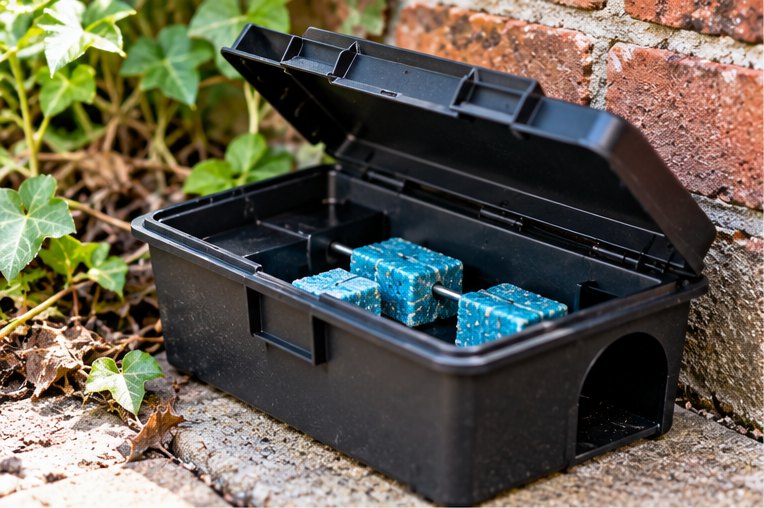
- Bait in lockable stations, secured in place so they cannot be moved, tipped or opened
- Stations sited on rat runs — against walls, behind cover — where rats go and pets and children do not
- Never loose bait, never in the open, never left down indefinitely
- Searching for and removing carcasses at each visit, which is one of the most effective controls available — though it is honest to say that some rats die where they cannot be reached, in voids, burrows and drains, which is part of why product choice and placement matter as much as recovery does
- Removing the bait at the end of the job rather than leaving it in place as a permanent fixture
That last point matters and it is where cheap work cuts corners. Bait left down permanently is both against how these products should be used and a standing risk to everything else.
When we would not use bait at all
There are properties and situations where trapping and proofing is simply the better route, and we would rather say so than default to bait.
Typically: homes with a dog that genuinely gets everywhere, properties with free-ranging poultry, sites near sensitive wildlife interest, food premises where placement is constrained, and any job where the rat population is small and the entry route is obvious enough that proofing alone will do it.
Tell us about pets, poultry and anything unusual at the point of booking. It changes what we recommend, and it is better to know before we arrive.
Before you book
Quick Answers
Is it safe with a dog in the house?
Bait goes in lockable stations secured so they cannot be moved or opened, on runs rather than anywhere a dog goes. But if you have a dog that gets everywhere, say so when you book — in some situations we will recommend trapping and proofing instead.
What happens to the rats that have taken bait?
We look for and remove carcasses at each visit, which is one of the most effective things that can be done about it — though some die where they cannot be reached, which is why placement and product choice matter as much as recovery.
Book a Rat Control Visit
Rats in the loft, the kitchen, the garden or the premises — tell us what you have seen and where.
Get in touch
Book a Rat Control Visit
Tell us what you have seen or heard and roughly where. If it is urgent, ring instead — the phone is faster.
- Phone
- 01908 465226
- Message us on WhatsApp
- sales@miltonkeynespestcontroller.co.uk
- Milton Keynes Pest Controller Service
- Address
- South Row
Milton Keynes
MK9 3DQ - Covering
- Milton Keynes, Buckinghamshire, Bedfordshire and parts of Hertfordshire